Monday, September 02, 2019

United in the Fight Against White Supremacy

So honored to be among the great cloud of witnesses speaking out and working to challenge and dismantle white supremacy.

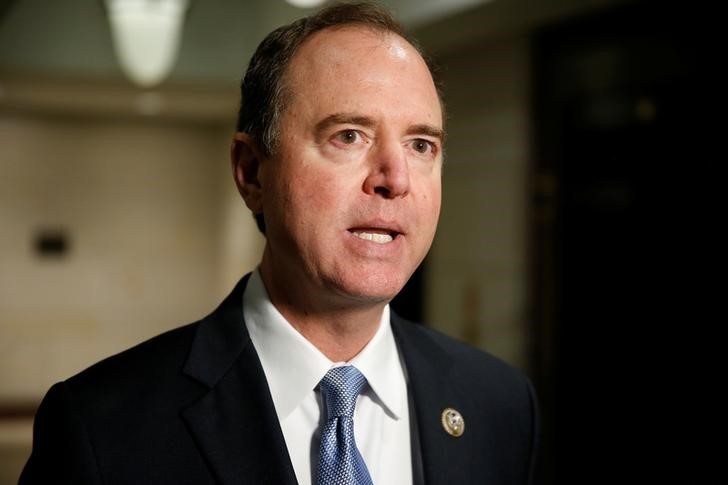
Here's a great summary video our colleagues at MPAC ... the Muslim Public Affairs Council ... put together of our recent event with Congressman Adam Schiff at All Saints Church. Together we CAN be the change we want to see!

Friday, August 09, 2019

ICYMI ... Countering White Supremacy with Congressman Adam Schiff


Scheduled way back in June, the idea for the event sprang from Capitol Hill testimony of Omar Ricci -- Chairman of the Islamic Center of Southern California -- on the issue of inaction towards white supremacist violence.

After that hearing, Congressman Schiff agreed to participate in a community forum with Omar and MPAC ... and All Saints and IKAR joined as co-sponsors as "a powerful message of our unity against hate." We secured the venue (All Saints Church), recruited a panel of interfaith leaders (Salam Al-Marayati, Andre Henry, Mike Kinman, Omar Ricci, Susan Russell and Brooke Wirtschafter), and issued  joint statement which began: “We must move beyond words, thoughts & prayers and into action.”

Over 600 community members gathered at All Saints Church on Monday, August 5 for a two hour program that included remarks from Congressman Schiff and wide ranging panel discussions and questions from the audience.

You can watch the whole forum here and I hope you will ... it is well worth the time and -- IMHO -- a beacon of hope and encouragement that together we can be the change we want to see.

Monday, August 05, 2019

Countering White Supremacy: Moving from Words to Action

Tonight we welcome Congressman Adam Schiff to All Saints Church for a Community Forum entitled “Countering White Supremacy” – an important and timely conversation exploring how we can combat bigotry and discrimination and promote pluralism, acceptance and freedom for all.

Here's the video clip Rep. Schiff recorded to promote the event:


Scheduled way back in June, the idea for the event sprang from Omar Ricci [Chairman of the Islamic Center] testifying on Capitol Hill in May on the topic of inaction towards white supremacist violence. 

After that hearing, Congressman Schiff agreed to participate in a forum with Omar and MPAC ... and All Saints and IKAR joined as co-sponsors as "a powerful message of our unity against hate."

And so we secured the venue (All Saints Church), recruited a panel of interfaith leaders (Salam Al-Marayati, Andre Henry, Mike Kinman, Omar Ricci, Susan Russell and Brooke Wirtschafter), and issued  joint statement which began: “We must move beyond words, thoughts & prayers and into action.”

And then El Paso happened. And they Dayton happened. And the event we started planning in May took on the fierce urgency of now as we reeled from the toxic combination of unlimited access to automatic weapons in our nation and unleashed white nationalistic venom in our national discourse.

As Mike Kinman said in his comment for our press release this morning:
"We need look no further than this weekend's deadly shootings to know that white supremacy kills. It kills not only with the speed of an AK-47 but slowly through inequalities in opportunity, health care, education and more. With a president whose words and policies embody white supremacy and embolden those who would enforce it at the point of a gun, it is critically important that we come together across faith traditions and with our elected leaders to have action-oriented conversations about changing the direction in which our nation is heading. All Saints Church has always been a place for conversations like that -- and that is why we are hosting this conversation this evening."
So join us if you can. We'll be live streaming from this link ...

Thursday, August 01, 2019

Dem Debate 2.0 Postmortem


From its reality show hype intro to a format that literally pitted candidates against each other with questions baited with GOP talking points CNN did not offer a “debate” designed to help voters understand policy positions and distinctions between candidates ... it orchestrated a set-up to create the click-bait headlines they wanted in the morning: Democrats Deeply Divided.

And that — in a nutshell — is the distillation of the disease that infects our American body politic: exploiting differences into division in order to divide and conquer the majority into polarized cells and inhibit their capacity to challenge the dismantling of our democracy before our very eyes.

We have to be smarter than that. #organize
We have to be better than that. #mobilize
We have to be the change we want to see. #unify

Wednesday, July 17, 2019

Remembering My Republican Daddy


I didn't remember that yesterday was the anniversary of my dad's passing until quite late in the day -- but when I did remember it made perfect sense that he'd been on my mind all day as I watched the chaos unfold in the Washington and kept shaking my head at what he would make of what had happened to his Republican Party. 

My dad -- Bill Brown -- was born in 1913 in Atlantic City ... the seventh of seven children ... into a family context that Daddy described as "episodically advantaged." His father ran "legitimate theaters" and at 16 -- as the Depression gripped the nation -- young Bill left school to make it on his own as an usher in "Roxie's Army" at the Radio City Music Hall.

A few years later he headed west and ended up at the Los Angeles Theater in downtown L.A. ... one of the great old movie palaces ... where he became the manager in the late 1930's ... and where he was working when, as he told it, the Japanese had the gall to bomb Pearl Harbor on his 28th birthday and so he signed up.

He served in the army in Burma, India and China as newsreel photographer and then returned to the L.A. and "theater biz" after the war ... where he met my mom ... who had come west from Minnesota and was the head usherette at the grand old theater.

I grew up thinking what daddies did when they went to work was wear a tuxedo and stand in the lobby to greet patrons. Daddy never saw a room he couldn't work ... never met someone he wasn't interested in talking to ... and he modeled a deep respect and curiosity about people and places that was one of his great legacies. That and a great tolerance for differences -- respectfully offered -- that was a hallmark of my growing up.

Daddy was a "Goldwater Republican" with strongly held opinions -- and as I turned out to have some pretty strong opinions of my own we had lots of "spirited conversations." I remember friends in college being amazed that I could actually go toe-to-toe with my dad about ... well, George McGovern comes to mind! ... but Daddy was convinced that encouraging us to think for ourselves was part of his job. Love and acceptance in my family wasn't conditioned on agreeing with each other ... and I think maybe that's one of the greatest gifts he gave us.

Daddy retired in 1977 and he and my mom had ten years of traveling, golfing, and grandparenting.  He died in the summer of 1988. After months of failing health he was ready, he said, to "pack it in" when he could no longer even follow his beloved Dodgers or swing a golf club. A lot has happened since then and I wish he'd been here to see it all.

Well, most of it.

I wish he'd been able to see his grandkids grow up.

I wonder if he'd have been as surprised as my mom was that I ended up a priest and I can only imagine how much fun he would have had with digital photography.

And then there's all he'd have to say about what has happened to the Republican Party he valued so much -- and about the fight we're in to save the democracy he enlisted to defend when it was under attack in 1941.

I can only imagine that he'd sign up for the fight again in 2019 -- and so it seems that the best way to continue his legacy is to go and do likewise.

La lucha continua. Miss you, Daddy!


Monday, July 15, 2019

"And who is my neighbor?" - A Sermon for San Diego Pride Sunday 2019


On Sunday, July 14th I had the privilege of preaching at St. Paul's Cathedral in San Diego for their annual Pride weekend celebration. It was a wonderful weekend of celebrating with old friends and new -- made all the more poignant as we were in the midst of the threatened ICE raids and shadow of deportation for immigrant siblings.

So grateful for such awesome partners in the ongoing work ... for the audacious goal of God's vision of a world aligned with love, justice and compassion ... and for the chance to pause and celebrate incremental victories along the way.


And Who Is My Neighbor?
A Sermon for Pride Sunday at St. Paul’s Cathedral, San Diego
[Proper 10C – July 14, 2019]

"O Lord, mercifully receive the prayers of your people who call upon you, and grant that they may know and understand what things they ought to do, and also may have grace and power faithfully to accomplish them ..."

These words that began our worship
are the same words being prayed throughout the Episcopal Church
on this Fifth Sunday after Pentecost:
in cities and suburbs;
high church and low;
in tiny missions and vast cathedrals –
anywhere Episcopalians gather
to pray their "common prayer" this morning.

And it is arguably my favorite prayer in the entire prayer book:
summing up the both/and of what is it to aspire
to walk this way of love;
to be the church in the world.

Help us understand what we're supposed to do.
Then help us make it happen.

It also distills down to an essential level
the exchange we just heard in one of the most famous of all Jesus' parables –
the story of the Good Samaritan.

It is the story Jesus told in response to the question "And who is my neighbor?"

It is an ancient question that is as relevant in 21st century San Diego
as it was in 1st century Palestine.

And it was a question that was a set up from the get go.
The lawyer who stood up to "test Jesus"
had to have known the law they shared
as people of the Torah
well enough to know what Jesus' response was going to be:

Love God and love your neighbor as yourself … words as old as Deuteronomy and as foundational to their mutual faith as you get.

And so he was not only ready for the answer --
as any good lawyer would be,
he was also ready with his follow up question:

"And who is my neighbor?"

Was he looking for a loop hole?
Was he looking to trap Jesus into violating some purity code?
Was he grandstanding for the gallery like a congressional committee member in an open hearing?

We'll never actually know.

What we do know is that Jesus was ready for his question.

And ... as I said yesterday as we gathered for the Pride Parade ...
It turns out the Indigo Girls were right:
the hardest to learn was the least complicated.

And who is my neighbor?

It turns out Jesus -- in telling the story of the Good Samaritan --
left absolutely no doubt that the answer was utterly uncomplicated:
the answer is that absolutely nobody is outside the category of neighbor God calls us to love as our selves.

It turns out the criteria for being one of those neighbors we’re supposed to love as ourselves is being a member of the human family. Period.

It turns out that love your neighbor as yourself means all your neighbors.
The ones you like and the ones you don’t.

The ones you agree with and the ones you are convinced are as wrong as they think you are.
The Boomers, the Millennials, the GenXers and the ones who fall into any of the other generational buckets it is increasingly fashionable to swing about as blunt instruments to beat each other up with.
 Every last one of them as beloved by the God who created them as you are.
 No exceptions.  No asterisk that reads *some restrictions apply.
Imagine just for a minute what the world would be like if we declared independence from all the lies we’re told about each other and embraced this truth Jesus came to proclaim.

That's the good news we took to the streets
to offer to those lined up along the parade route:
many who think they know enough about Christians not to want to be one ...
many who associate being Christian with judgment, condemnation and exclusion
rather than justice, compassion and love.

And yesterday we had the chance to show them something different
as outward and very fabulous visible signs of God's inclusive love.

(And if you missed Canon Jeff Martinhauk
in his rainbow tutu do go find a picture on Facebook!)


But let's be very clear:
the good news we took to the streets of San Diego yesterday
is not some radical new agenda cooked up by a left coast think tank
(not that there’s anything wrong with left coast think tanks.)
 
It is the same good news the Church has proclaimed throughout the ages --
it is the saving grace of God in Christ Jesus.

And the essence of that message
was brilliantly summarized a decade or so ago
by priest and pastor Michael Hopkins:
a past president of Integrity and my colleague, friend and mentor.

Michael wrote: "As we continue to proclaim our message of full inclusion and work toward its reality in our Church, let us not forget that it is simply the message of the Gospel. Let us now allow ourselves to be marginalized by talk about "issues that distract us from the real work of the Church" or "why can't we talk about mission instead of sex." We are talking about the "real work" of the Church, which is the proclamation of the Gospel. 
We are talking about the Church's fundamental mission. The full inclusion of lesbian, gay and bisexual people in the life of the Church is not about sex or even about "an issue": it is about the Gospel of Jesus Christ."

It is that Gospel that brought us out into the streets of San Diego yesterday:
the opportunity to embody the Good News of a God
who loved us enough to become one of us;
to witness to and welcome those who have been told
they are beyond God’s grace simply because they are gay or lesbian;
bisexual, transgender or gender fluid.

And it is that Gospel that sends us out into the world the other 364 days of the year
as we continue to pray the prayer we prayed this morning:

Help us understand what we're supposed to do.
Then help us make it happen.

This work we are about is nothing less
than the building of that kingdom come on earth as it is in heaven we pray for
every time we gather as God’s beloved people –
every time we receive the bread and wine made holy
and pray to be sent out to do the work we have been given to do –
every time we take up our cross and go out into the world
as bearers of the Good News of a God
who loved us enough to become one of us …
and then called us to love our neighbors in exactly the same way.

And you don’t love your neighbors
by failing to give them the equal protection guaranteed all Americans
or equal inclusion in the sacraments offered to all Episcopalians
because they are gay or lesbian, bisexual, transgender or gender fluid.

You don't love your neighbors
by separating their families, putting their children in cages
and denying them due process.

You don't love your neighbors
by taking away their healthcare,
by terrorizing them with threats of deportation raids,
or by banning them because they’re Muslims.

The list goes on and on.

Nobody ever said it would be easy.
And I don’t know anybody who would argue with the fact
that it has gotten harder in the last few years: 
which is why it is even more important
that we keep ourselves sustained, resourced and supported
for the work we have been called to do.

And that brings me to Amos and this morning’s lesson about the plumb line.

Now I’m sure a plumb line is a great metaphor
if you know what a plumb line is.

But what I am wondering this morning
is if a better 21st century metaphor for what God gave Amos
might be, not a plumb line, but a satellite signal –
hooking you up to the God of love and justice and compassion,
plugging in your spiritual GPS.

Like a GPS connected to the satellite
that keeps it on course as long as it is plugged in,
we are connected to the love of God
which will keep us on course if we stay plugged in
and keep our lives in alignment
with God’s justice, with God’s love, and with God’s compassion.

What keeps us in that alignment –
what keeps our spiritual GPS charged and connected to that satellite –
is community.

And so it is to this place that we come
to remember both that we are loved and that we are called to walk in love;
it is to this place that we come to be fed and fuelled
in order to go back out into the world in witness to that love.

“Do this in remembrance of me” – we will say in just a few minutes,
when we gather around this table
to share the bread and wine made holy.

“In remembrance of,” to remember – to reverse our amnesia –
that we are loved by the God
who created us in love and then called us to walk in love with each other,
and who will at the end of this journey gather us back into that love.

And so since we already know
the answer to the question “where are we going?”
the question becomes instead:
what kind of journey are we going to make to get there?

Can we stay plugged into the GPS of God’s values
of love, peace, justice and compassion?

Will we listen when it is time to recalculate in order to stay on course and avoid the pitfalls and potholes the world and culture can throw our way?

Can we challenge not only ourselves but our institutions to recalculate when we, or they, get off course?

Can we take up the challenge Megan Rapinoe offered this week in NYC --
The challenge I’ve come to think of as the Gospel According to Megan:
 
          To be better. To love more, to hate less. To listen more, to talk less.
          To make the world a better place.

I want to close with these words from Barbara Mudge – the former Vicar of St. Francis in Simi Valley -- who ended every service with these words of dismissal:

The holiest moment is now – fed by word and sacrament go out to be the church in the world.

And that my brother, sisters and gender fluid siblings
is precisely what we are called to do –
each and every time we choose to be church
choose to love more and hate less
choose to make God’s justice roll down like waters
choose to love absolutely every one of our neighbors as ourselves.

Now -- let’s go be church.
Amen.

Sunday, June 23, 2019

On Thin Places, the Bishop of Maine and Strength for the Journey


There any number of definitions of the term "thin place" but here's the one I like:
Thin places are places of energy. A place where the veil between this world and the eternal world is thin. A thin place is where one can walk in two worlds – the worlds are fused together, knitted loosely where the differences can be discerned or tightly where the two worlds become one.
On Saturday, June 22, 2019 at St. Luke's Cathedral Church in Portland Maine we got ourselves a new bishop. God willed, the people consented and with all the pomp, circumstance and liturgical panache that our brilliant preacher du jour Barbara K. Lundblad fondly described as "weird," Thomas James Brown became the 10th Bishop of the Diocese of Maine.

People came quite literally from sea-to-shining-sea to join the good people of the diocese -- adding some Big Fat Episcopal Family Reunion energy to the gathering. It was grand and glorious and there were moments when I literally felt the thinness of the veil between the two worlds of where we've come from and where we're journeying to -- of the power of the ancestors on whose shoulders we stood on Saturday in St. Luke's Cathedral and of the hope of those who come after us trusting us to keep up the work of fully becoming the church we have been called to be.

In that thin place I remembered another consecration down the road in New Hampshire in November 2003 -- where instead of a cathedral with a Pride flag out front we were in a hockey arena with bomb sniffing dogs, metal detectors and a scrum of international news vans out front. Nevertheless, we persisted.

I remembered flying to Nottingham in England with Frank Griswold and other members of our TEC team -- summoned to the 2005 meeting of the Anglican Consultative Council to offer "To Set Our Hope On Christ" as our response to the Windsor Report in the days when it looked like price tag for the full inclusion of LGBTQ people in the work and witness of the church was going to be getting voted off the Anglican Island. Nevertheless we persisted.

I remembered the month we spent at Lambeth Conference in 2008 as part of the Inclusive Communion witness and the fears that our bishops had "drunk the purple Kool-Aid" and LGBTQ Episcopalians were going to end up as sacrificial lambs on the altar of global Anglican politics. Nevertheless we persisted.

And we have continued to persist -- weathering the storms of backlash and the threats and the challenges of "the inclusion wars" to arrive at a moment during the consecration of Thomas James Brown as the 10th Bishop of Maine when the packed cathedral sang this verse of "The Church's One Foundation" ... and it felt like a very thin place indeed.

Tho' with a scornful wonder,
we see her sore oppressed,
by schisms rent asunder, 

by heresies distressed,
yet saints their watch are keeping,
their cry goes up, "How long?"
And soon the night of weeping
shall be the morn of song.


This beloved old hymn -- which I proudly memorized all five verses in 3rd grade at Lutheran Day School and remember them all still -- was a profound reminder that the foundation of this church of ours is Jesus ... not some dogma, doctrine, council or confab. It was a reassurance that we have weathered storms in the past and will weather storms in the future -- and a moment to be grateful for the "morn of song" we had together at St. Luke's Cathedral on a beautiful June morning in Maine.

Make no mistake about it ... we have not yet "arrived at destination." We have miles to go before we rest in the work of being a church that fully lives up to former Presiding Bishop Ed Browning's dream of being a church where there would be no outcasts. And there will be nights of weeping aplenty before as we complete our journey along that arc of history that is long ... but we are promised bends toward justice.

And when  those nights come -- and they will -- I pray we'll remember morns of song like we had at St. Luke's Cathedral on Saturday June 22nd ... moments when we could feel the thin place between the world we've come from and the place we're journeying to and could feel the saints surrounding us. And I pray the gift of that morning will continue to give us strength for the journey. La lucha continua -- the struggle continues.